
STAKEHOLDER REGISTER

International Football Tournament Stadium & Digital Ticketing Project

Project Manager: Alex
Version: 1.0
Date: 30 November 2025
Status: Active – Updated Quarterly

1️⃣ Internal Stakeholders

S-01 – Ministry Steering Committee

  • Role: Project Sponsor (collective body)
  • Type: Internal / Executive
  • Interest: National reputation, budget discipline, tournament readiness
  • Influence: Very High
  • Power: Very High
  • Impact on Project: Critical
  • Engagement Level: Manage Closely
  • Expectations:
    • On-time delivery
    • No public controversy
    • Transparent reporting

S-02 – Minister of Sports

  • Role: Political authority
  • Interest: Political success, visibility
  • Power: Very High
  • Influence: Very High
  • Engagement Strategy: Manage Closely
  • Risk: Scope pressure (VIP seating, media demands)

S-03 – Project Management Office (PMO)

  • Role: Governance oversight
  • Interest: Compliance, reporting accuracy
  • Power: High
  • Influence: High
  • Engagement: Manage Closely

S-04 – Finance Authority

  • Role: Budget control
  • Interest: Cost discipline
  • Power: High
  • Influence: High
  • Engagement: Keep Satisfied

S-05 – Alex (Project Manager)

  • Role: Delivery accountability
  • Interest: Successful execution
  • Authority: Operational authority
  • Engagement: Central decision-maker

2️⃣ External Construction Stakeholders

S-06 – Prime Construction Contractor

  • Role: Stadium builder
  • Interest: Profitability, risk transfer
  • Power: High
  • Influence: High
  • Engagement: Manage Closely
  • Risk: Contract disputes

S-07 – Turf Subcontractor

  • Role: Specialized turf installation
  • Interest: Certification success
  • Power: Medium
  • Influence: Medium
  • Engagement: Monitor Closely

S-08 – Entry Gate Supplier

  • Role: Hardware provider
  • Interest: Integration success
  • Power: Medium
  • Influence: Medium

S-09 – Regulatory Authority

  • Role: Safety & occupancy approval
  • Interest: Compliance
  • Power: Very High
  • Influence: Very High
  • Engagement: Manage Closely
  • Risk: Approval delays

3️⃣ Digital & IT Stakeholders

S-10 – Digital Platform Vendor

  • Role: Ticketing system development
  • Interest: Successful deployment
  • Power: High
  • Influence: High
  • Engagement: Manage Closely

S-11 – Cybersecurity Authority

  • Role: Security clearance
  • Power: High
  • Influence: High
  • Engagement: Keep Satisfied

S-12 – Integration Consultant

  • Role: Hardware-software interface
  • Influence: Medium
  • Engagement: Manage

4️⃣ Tournament & Public Stakeholders

S-13 – International Governing Body

  • Role: Tournament standards enforcement
  • Power: Very High
  • Influence: Very High
  • Engagement: Manage Closely
  • Risk: Turf rejection

S-14 – Sponsors & Commercial Partners

  • Role: Financial contributors
  • Interest: Brand exposure
  • Influence: High
  • Engagement: Keep Satisfied

S-15 – Fans / Public

  • Role: End users
  • Interest: Smooth ticketing experience
  • Influence: Medium (reputational)
  • Engagement: Monitor

S-16 – Media

  • Role: Public communication channel
  • Interest: Transparency & controversy
  • Influence: High (reputational)
  • Engagement: Monitor Closely

5️⃣ Organizational Stakeholders

S-17 – Functional Managers

  • Role: Resource providers
  • Interest: Team workload
  • Influence: Medium

S-18 – Operations & Facilities Team

  • Role: Future stadium operators
  • Interest: Smooth handover
  • Power: Medium
  • Engagement: Manage

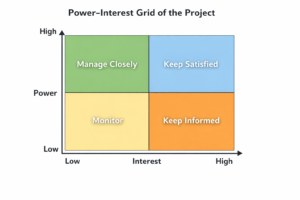
6️⃣ Stakeholder Classification (Power–Interest Grid)

Manage Closely

  • Steering Committee
  • Minister
  • Prime Contractor
  • Digital Vendor
  • Regulatory Authority
  • International Governing Body

Keep Satisfied

  • Finance Authority
  • Sponsors
  • Cybersecurity Authority

Keep Informed

  • Operations Team
  • Functional Managers

Monitor

  • Public
  • Media

7️⃣ Stakeholder Expectations Summary

Stakeholder

Primary Expectation

Minister

Political success

Steering Committee

On-time & within budget

Contractor

Profit stability

Digital Vendor

Scope clarity

Governing Body

Compliance

Operations Team

Maintainable facility

Public

Smooth ticketing

8️⃣ Stakeholder Risks

Stakeholder

Risk Type

Minister

Scope expansion

Contractor

Contract dispute

Regulatory Authority

Approval delay

Governing Body

Quality rejection

Digital Vendor

Performance failure

Media

Reputational escalation

9️⃣ Update Frequency

  • Initial version: After Charter approval
  • Updated:
    • After vendor selection
    • After major risk event
    • Before governance reviews
Scroll to Top

Interpersonal & Team Skills

Abilities used by project managers and team members to communicate, collaborate, influence, resolve conflicts, and build effective working relationships within the project team and with stakeholders.

Drexler–Sibbet Team Performance Model

A team development framework created by Allan Drexler and David Sibbet that describes how teams progress through stages of orientation, trust building, goal clarification, commitment, implementation, and high performance to achieve effective collaboration and project success.

McGregor’s Theory X and Theory Y

A management theory developed by Douglas McGregor that describes two contrasting assumptions about worker motivation. Theory X assumes employees are naturally lazy, avoid responsibility, and require close supervision, while Theory Y assumes employees are self-motivated, responsible, and capable of contributing creatively when properly supported.

Maslow’s Hierarchy of Needs

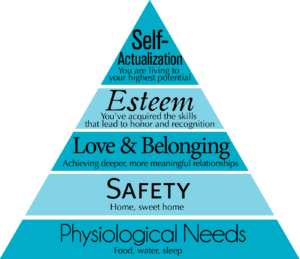
A motivation theory developed by Abraham Maslow that explains human motivation as a progression of needs arranged in levels—from basic physiological needs and safety to social belonging, esteem, and ultimately self-actualization, where individuals seek personal growth and fulfillment.

Situational Leadership Model (Hersey–Blanchard)

A leadership theory developed by Paul Hersey and Ken Blanchard that suggests effective leaders adjust their leadership style based on the competence and commitment of their team members, using different combinations of directing, coaching, supporting, and delegating to match the needs of the situation.

Forming

The initial stage of team development in which team members meet, learn about the project, understand their roles and responsibilities, and begin establishing relationships while relying on guidance from the project manager.

Tuckman’s Team Development Model

A framework developed by Bruce Tuckman that explains how project teams evolve through a series of stages as members build relationships, resolve conflicts, establish norms, and become effective collaborators. The model identifies five stages—Forming, Storming, Norming, Performing, and Adjourning—each representing different levels of team maturity, communication, trust, and productivity during the lifecycle of a team.

Responsibility Assignment Matrix

A chart that maps project activities or deliverables to the team members responsible for performing or supporting the work.

Commitment

The level of dedication a resource has to project objectives.

Resource Assignment

The process of allocating specific resources, such as people, equipment, or materials, to project activities or tasks.

Core Team

A small group of key project members responsible for performing the main project work and supporting the project manager in delivering the project objectives.

Baseline

An approved version of a work product that can be changed only through formal change control and is used as a basis for comparison.

Stakeholder Engagement

The process of communicating and working with stakeholders to address their needs, expectations, and concerns throughout the project.

Stakeholder Analysis

The process of identifying project stakeholders and assessing their interests, influence, and impact on the project.

Escalation

The process of raising an issue or decision to a higher level of authority when it cannot be resolved at the current level.

Stakeholder Conflict

A situation in which stakeholders have opposing interests, expectations, or perceptions regarding the project.

Identify Stakeholders

The process of determining which individuals or groups may affect or be affected by the project.

External Stakeholder

Individuals or organizations outside the organization.

Internal Stakeholder

Individuals or groups within the performing organization.

Interest

The degree to which a stakeholder is affected by or cares about the project outcomes.

Stakeholder Register

A document that identifies project stakeholders and documents their interests, influence, and impact on the project click to see exemple.

Risk Identification

The process of recognizing and recording potential risks tthat may affect the project and documenting their characteristics early in the project life cycle.

Governance Risk

The risk that governance structures, approval paths, or authority limits may delay or constrain project decisions.

Procurement Risk

The risk that vendor selection, contract execution, or supplier performance may negatively affect the project.

Schedule Risk

The possibility that project activities may take longer than planned, causing delays to the project schedule.

Compliance

The act of adhering to laws, regulations, standards, policies, or contractual requirements applicable to a project.

Power

The ability of an individual to influence the behavior, decisions, or actions of others.

Project Approach

A high-level strategy that defines how the project will be executed, including the selected development method, processes, and techniques.

Analysis Paralysis

The state of overanalyzing a situation to the point that progress is delayed or prevented.

Sufficiency

The state in which a document contains enough information to fulfill its purpose and allow the project to proceed.

Risk Responses

Planned actions developed to address identified project risks in order to reduce threats or enhance opportunities.

Cost estimates

Quantitative assessments of the likely costs required to complete project activities or deliverables click to see exemple.

Requirement

A documented condition or capability that a product, service, or result must meet to satisfy stakeholder needs or expectations.

Planning

A group of processes performed to establish the scope, schedule and costs of the project, refine objectives, and define the course of action required to achieve the project objectives.

Progressive Elaboration

The process of refining details as more information becomes available.

Project Management Plan

A formal, approved document that describes how the project will be executed, monitored, and controlled click to see exemple.

Schedule

A timetable that defines when project activities and milestones are planned to start and finish.

Assumption

A factor believed to be true for planning purposes without definitive proof.

Input

An approved deliverable, resource, document, or information produced by previous projects or processes and used in the current project.

Phase Review

A formal evaluation at the end of a project phase to assess performance and determine whether the project should proceed to the next phase ot not.

Approval workflow

A defined sequence of review and authorization steps that specifies who must evaluate, approve, or reject project documents or decisions before they can be implemented, in accordance with organizational governance.

Regulatory requirement

Laws, regulations, or government rules that a project must comply with during its execution.

Approval gate

Formal decision points in a project where authorized stakeholders review progress and determine whether the project should proceed to the next phase.

Process

A set of interrelated activities performed in a specific order to achieve a defined objective or produce a specific output.

escalation path

A defined process that specifies how and to whom issues or decisions are elevated when they cannot be resolved at the current level of authority.

internal policies

Formal rules, guidelines, and procedures established within an organization that govern how work and activities must be performed.

strategic business need

A documented business justification explaining why an organization initiates a project in order to achieve its strategic objectives or improve business value.

Constraint

Limiting factor that restrict a project’s options or influence how the project work can be performed, such as fixed budget, schedule deadlines, regulatory requirements, available resources, or predefined scope conditions.

Scope

The sum of the products, services, and results to be provided by a project, including the work required to deliver those outputs and the boundaries that define what is included and excluded from the project.

Authority Limits

The boundaries within which the project manager can make decisions without escalation.

Risk Management

The systematic process of identifying, analyzing, and responding to project risks.

Governance

The framework of rules, roles, responsibilities, decision-making authority, and oversight mechanisms that ensure projects align with organizational objectives, comply with policies and regulations, and are controlled throughout their life cycle.

Authorization

The formal approval granting the project manager or organization the right to initiate and carry out project work, including the use of organizational resources and decision-making authority.

Benefits

Measurable improvements resulting from outcomes perceived as advantageous to stakeholders.

Vendor

External organization contracted to provide goods or services.

Business Need

A problem or opportunity that justifies initiating a project or program.

Hybrid Project

A project that combines predictive and agile delivery approaches within one initiative.

Agile Approach

A delivery approach that emphasizes iterative development, customer feedback, and adaptability.

Predictive Approach

A delivery approach where scope, schedule, and cost are defined upfront and managed through formal control processe.

Selection

The act of designating or nominating an individual to serve as project manager, identifying responsibility for leadership of the project, but not necessarily granting formal authority until the project is officially authorized.

Project Sponsor

The individual or group that provides resources and support for the project and is accountable for its success

International Football Tournament

A large-scale global sporting event involving multiple national teams, fixed opening dates, and significant public visibility.

Close Project or Phase

The process of finalizing all activities and formally completing the project.

Lessons Learned Register

A document capturing knowledge gained during the project (click to see exemple).

Operational Readiness

The degree to which operations can support and sustain the delivered product.

Handover to Operations

The formal transfer of ownership, responsibility, and risk from the project to operations.

Integrated Change Control

The process of reviewing and approving changes across the project.

Change Request

A formal proposal to modify project baselines or plans.

Issue

A current condition or situation that is already affecting the project objectives and requires resolution.

Work Performance Report

A document summarizing performance information for stakeholders (click to see exemple).

Work Performance Information

Performance data analyzed and integrated to provide context (click to see exemple).

Work Performance Data

Raw observations and measurements collected during project execution (click to see exemple).

Control Procurements

the process of managing procurement relationships and contract performance.

Claim

A formal request for compensation or time adjustment under a contract.

Liquidated Damages

Pre-agreed penalties for failure to meet contractual obligations.

Compensable Delay

A delay that entitles the seller to additional time and/or money.

Excusable Delay

A delay allowed without penalty under the contract.

Force Majeure

A contract clause excusing performance due to unforeseeable events beyond control.

Procurement Management Plan

A document describing how goods and services will be acquired (click to see exemple).

Workaround

An unplanned response to a risk that occurs when no planned response exists.

Expected Monetary Value

A risk analysis technique calculating average outcomes (click to see exemple)

Quantitative Risk Analysis

Numerical analysis of the combined effect of risks on project objectives (click to see exemple).

Residual Risk

Risk remaining after responses have been implemented.

Risk Register

A document listing identified risks, their characteristics, responses, and owners click to see exemple.

Risk

An uncertain event or condition that may affect project objectives.

Quality Expectations

Stakeholder perceptions of acceptable performance beyond formal standards.

Quality Standards

Mandatory specifications that must be complied with.

Quality Management Plan

A document describing how quality policies, standards, and requirements will be met (click to see exemple).

Benefit–Cost Ratio

The ratio of expected benefits to expected costs.

Payback Period

The time required to recover the initial investment.

Internal Rate of Return

The discount rate at which NPV equals zero.

Net Present Value

The value of future cash flows discounted to today.

Return on Investment

A financial measure comparing the net benefit of an investment to its cost.

Management Reserve

Time or cost set aside by management for unforeseen work, not included in the baseline.

Contingency Reserve

Time or cost set aside for identified risks.

Cost Baseline

The approved version of the project budget used for monitoring and control.

Critical Path

The longest sequence of dependent activities that determines the shortest project duration.

Lag

The amount of time an activity is delayed relative to its predecessor.

Lead

The amount of time an activity can be advanced relative to its predecessor.

Rolling Wave Planning

A planning approach where near-term work is planned in detail and future work at a higher level.

Schedule Management Plan

A document that establishes how the schedule will be developed, monitored, and controlled (click to see exemple).

Activity-on-Node Network

A schedule network diagram where activities are represented by nodes and dependencies by arrows (click to see exemple).

Define Activities

The process of identifying and documenting specific actions needed to produce deliverables.

Decomposition

The technique of subdividing deliverables and work into smaller, more manageable components.

WBS Dictionary

A document providing detailed information about each WBS component (click to see exemple).

Work Breakdown Structure

A hierarchical decomposition of the total scope of work into manageable components (click to see exemple).

Project Scope Statement

A detailed description of the project deliverables, boundaries, and acceptance criteria (click to see exemple).

Requirement Traceability Matrix

A table that links requirements to their origins and corresponding deliverables (click to see exemple).

Requirements Documentation

A detailed description of individual stakeholder requirements (click to see exemple).

Requirements Management Plan

A document that defines how requirements will be collected, analyzed, tracked, and reported (click to see exemple).

Scope Management Plan

A component of the project management plan describing how scope will be defined, validated, and controlled (click to see exemple).

Phase Gate

A review point at the end of a project phase where performance is evaluated to determine whether to continue, modify, or terminate the project)

Project Phase

A collection of logically related project activities that culminates in the completion of one or more deliverables.

Project Life Cycle

The series of phases a project passes through from initiation to closure.

Tailoring

the deliberate adaptation of project management processes to fit the project’s context, size, and complexity.

Organizational Process Assets

Plans, processes, policies, procedures, and knowledge bases specific to the organization.

Enterprise Environmental Factors

External and internal conditions not under the control of the project team that influence or constrain the project.

Psychological Safety

A shared belief that the team is safe for interpersonal risk-taking.

Servant Leadership

A leadership approach focused on serving the team by removing obstacles and enabling performance.

Leadership

The ability to guide, motivate, and influence individuals or teams toward achieving objectives.

Salience Model

A stakeholder classification model based on power, legitimacy, and urgency (click to see exemple).

Stakeholder Engagement Assessment Matrix

A tool that compares current and desired stakeholder engagement levels (click to see exemple).

Power Interest Grid

A stakeholder analysis tool that categorizes stakeholders based on their level of authority (power) and their level of concern or involvement (interest) in the project.

Stakeholder

An individual, group, or organization that may affect, be affected by, or perceive itself to be affected by a project.

Assumption Log

A document used to record assumptions and constraints throughout the project lifecycle click to see exemple.

Benefits Management Plan

A document that defines how benefits will be delivered, measured, and sustained over time and who is responsible for them click to see exemple.

Business Case

A documented economic justification for the project that explains the expected benefits, costs, and risks Click to see exemple.

Project Charter

A document issued by the sponsor that formally authorizes the project and grants the project manager authority to apply organizational resources click to see exemple.

Directive PMO

A PMO that directly manages projects and assigns project managers

Controlling PMO

A PMO that requires compliance with standards and frameworks

Supportive PMO

A PMO that provides guidance and templates with low control.

Project Management Office

An organizational structure that standardizes project-related governance processes and facilitates the sharing of resources, methodologies, and tools.

Strong Matrix Organization

An organizational structure where project managers have high authority and full-time project staff, while functional managers retain limited control.

Legitimacy

The recognized and accepted right to make decisions and take actions, derived from formal authorization, governance structures, and assigned authority rather than personal influence or urgency.

Accountability

The obligation to answer for outcomes and consequences, regardless of who performed the work.

Authority

The legitimate power granted to an individual to make decisions, allocate resources, give direction, and approve actions within defined boundaries established by the organization’s governance framework.

Governance Path

The defined route through which project decisions, documents, and issues move for review, approval, escalation, and oversight within the organization’s governance framework.

Project Governance

The framework of rules, roles, decision-making authority, and oversight used to align the project with organizational strategy and ensure accountability.

Portfolio

A collection of projects, programs, and operations managed as a group to achieve strategic objectives

Program

A group of related projects managed in a coordinated way to obtain benefits not available from managing them individually.

Project Manager

The person assigned by the performing organization to lead the team responsible for achieving project objectives.

Project

a temporary endeavor undertaken to create a unique product, service, or result

Title

Aaaaaaaaaaaaaaaaaaaaaaaaaaaaaaaaaaaaaaaaaaaaaaaaaaaaaa

aaaaaaaaaaaaaaaaaaaaaaaaaaaaaaaaaaaaaaaaaaaaaaaaaaaaaaaaaa

Ministry of Sports

A public-sector organization responsible for national sports infrastructure and programs